
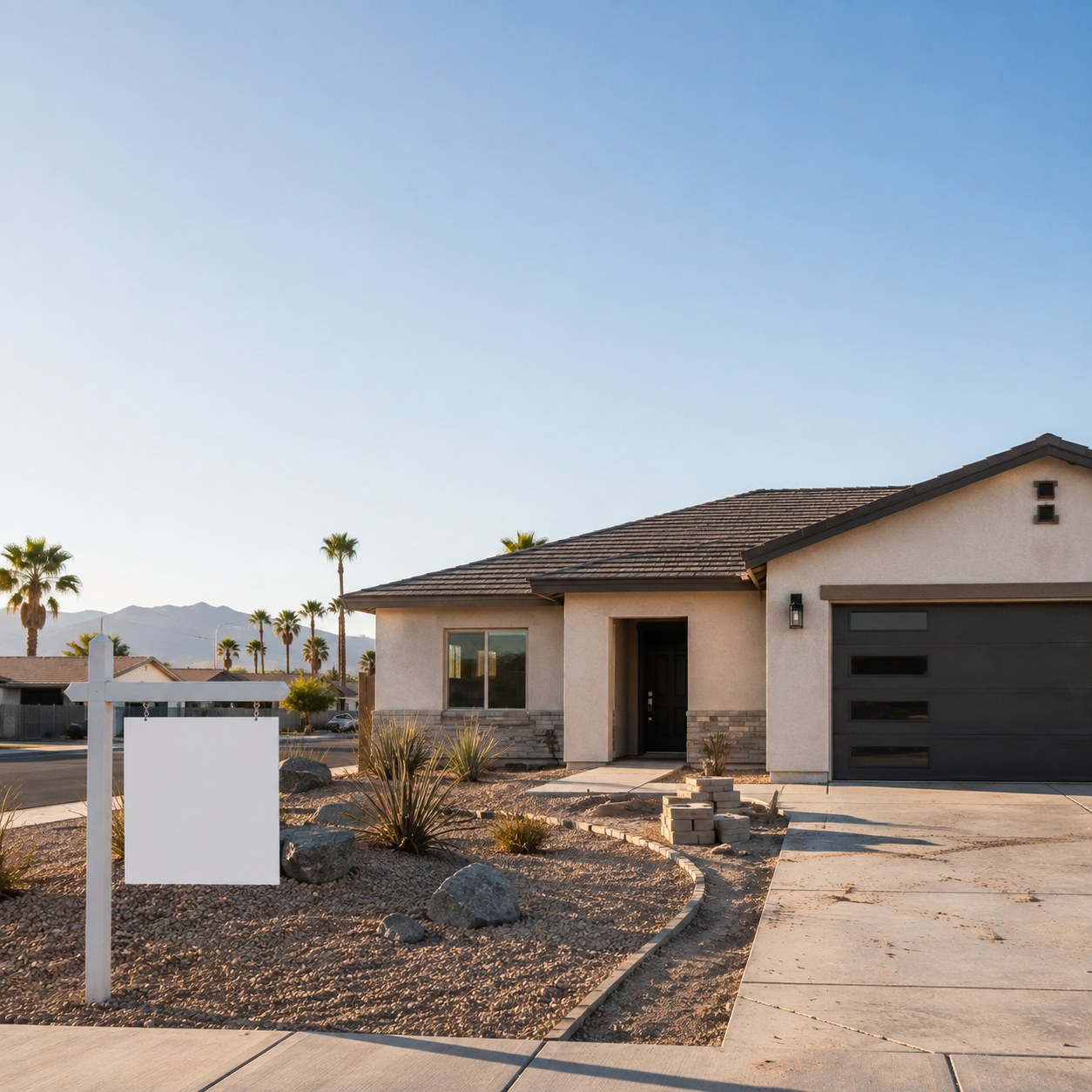
A lender I fund deals with called me in July after a flip near the southwest valley took an extra two months to sell. The house was done, priced right, and still it sat. His question was the one every private lender in town is quietly asking right now: if flips are taking longer to move, do I need to change how I write the loan? He was not panicking. He was doing the smart thing, which is adjusting his assumptions before the market forces him to.
Here is the short version. A slower resale market does not make fix-and-flip lending a bad business, but it does change the math you underwrite to. When homes sit closer to two months instead of two weeks, the risk on a flip loan shifts from the borrower’s skill to the calendar, and good private lenders respond by tightening loan-to-value, building in a longer runway, and stress-testing the exit price instead of trusting last spring’s comps.
What actually changed in the Las Vegas flip market
For a couple of years, a competent flipper in Las Vegas could count on a fast, forgiving exit. You bought, you renovated, you listed, and buyers competed for the finished product within days. That speed hid a lot of thin margins, because even a mispriced flip sold before the holding costs added up.
That cushion is thinner now. Inventory across the valley has climbed to roughly three and a half months of supply, and finished homes are taking meaningfully longer to sell than they did at the peak of the frenzy. Prices are broadly flat rather than climbing, hovering around the mid-four-hundreds for the valley median. None of that is a crash. It is a normalization, and for a lender it means the exit is slower and less certain than the spreadsheet from eighteen months ago assumed.
How I adjust loan-to-value when exits slow down
The first lever is loan-to-value, and specifically which value you are lending against. In a hot market, lenders drift toward lending on an optimistic after-repair value because rising prices bail out small errors. In a slower market, that optimism is exactly what gets capital hurt.
I lean harder on after-repair value discipline. If a comparable finished home is taking sixty days to sell, I want the loan sized so that even a conservative ARV, the price that moves in a reasonable window rather than the aspirational top of the range, still leaves a real equity cushion under my position. I pay attention to the as-is value too. The purchase price and current condition tell me what the property is worth if the borrower never lifts a hammer, and in a slow market that floor matters more, because it is what protects principal if the project stalls and I have to step in.
In a fast market you get paid for the borrower’s hustle. In a slow one you get paid for the equity cushion you insisted on at closing.
Terms and timelines: build in a longer runway
The second adjustment is time. A flip loan written for a six-month exit made sense when houses sold in two weeks. When the same house might take two months to find a buyer after a three or four month renovation, a six-month term sets the borrower up to need an extension right when the market is least forgiving.
So I underwrite to a realistic calendar. That usually means writing a longer term up front, or structuring a clear extension option with terms both sides understand before closing rather than negotiating under pressure at month five. It also means funding the interest reserve to match. If the project honestly needs nine or ten months from purchase to payoff, a reserve that only covers six is a gap the borrower has to fill out of pocket at the worst possible moment. Matching the reserve to the real timeline keeps a slow sale from turning into a missed payment.
Stress-testing the exit before you fund
The habit that protects capital most in a market like this is simple: assume the sale is slower and softer than the borrower’s pro forma, then see if the deal still works.
Discount the exit price. I ask what happens to my position if the finished home sells for a few percent under the borrower’s target, because a flat-to-soft market punishes aggressive list prices. Add carrying months. I extend the holding period in my head and check whether the interest reserve, the borrower’s liquidity, and my LTV all still hold up if the house sits an extra sixty days. Check the borrower’s cash beyond this deal. A borrower with reserves of their own can outlast a slow sale. A borrower who is fully extended across three simultaneous flips is the one whose calendar problem becomes my problem. None of this requires predicting the market. It just requires refusing to underwrite to the best case.
The bottom line
A slower flip market is not a reason for private lenders in Las Vegas to sit on the sidelines, but it is a reason to write sharper loans. The deals still pencil when you lend against a conservative exit, size the term and the interest reserve to a realistic timeline, and insist on an equity cushion that survives a house sitting longer than anyone would like. The borrowers who understand this are actually the ones worth funding, because they are underwriting the same slower calendar you are. Protect the principal first, let the yield follow, and a normalizing market becomes a place to lend carefully rather than a reason to stop.
Questions I get after this
Are fix-and-flip loans just riskier now, or is it still a good place to lend?
It is still a sound place to lend if you adjust your assumptions. The added risk comes almost entirely from a slower, less certain exit, and you offset that with lower leverage, a longer runway, and a conservative view of the resale price. The lenders getting hurt are the ones still underwriting to last year’s speed, not the ones who tightened up.
What loan-to-value makes sense on a Las Vegas flip in this market?
Rather than chase a single number, I focus on which value the loan is measured against. I want the loan comfortably below a conservative after-repair value and I keep an eye on the as-is value as a floor. The goal is a cushion that still holds if the home sells for a little less and takes a little longer than the borrower hopes.
How long should the loan term be if homes are selling slower?
Long enough that a normal renovation plus a realistic listing period does not force an extension. If a project needs three or four months of work and homes are taking closer to two months to sell, a six-month term is tight. I would rather write a longer term or a clear extension option up front and fund the interest reserve to match.
What is the single biggest thing you check before funding one now?
The borrower’s ability to outlast a slow sale. A strong exit assumption means little if the borrower runs out of cash while the house sits. I look at their liquidity beyond this one deal, how many projects they are carrying at once, and whether the interest reserve covers the real timeline, not the optimistic one.
Thinking about a fix-and-flip trust deed in a slower market?
Lending on flips in a normalizing Las Vegas market is still a good business when the loan is structured for the calendar we actually have, not the one we had two years ago. If you are weighing a fix-and-flip or construction trust deed in Las Vegas or Henderson and want a second set of eyes on the loan-to-value, the term, and the exit assumptions, I am glad to walk through it with no pressure. Visit my Private Capital page or reach me through the contact page to start the conversation, and subscribe for future notes or follow along on Instagram and LinkedIn.
Beau McDougall is Executive VP of Private Capital at All Western Mortgage, NMLS #2611909. This article is educational only and is not investment or financial advice. All investments carry risk. Consult your own financial and legal advisors before funding a trust deed.