
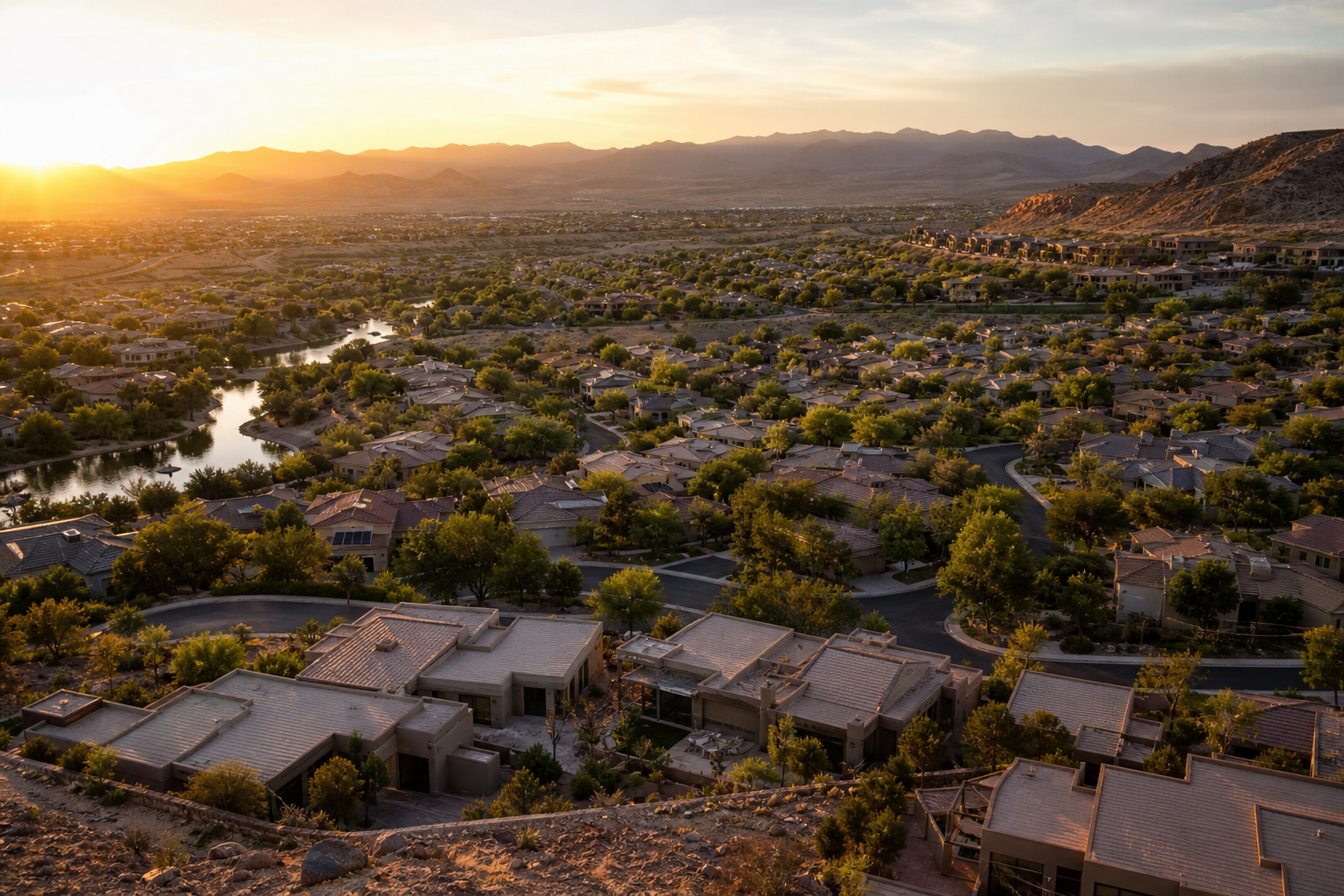
Southern Nevada closed sales fell in August 2026, inventory climbed above 7,500 single-family homes, and the median price dipped to $475,000 from a $490,000 peak. Sellers who price to current comps, monitor early showing activity, and use concessions strategically still sell within 30–45 days.
What is happening to Las Vegas home sales in August 2026?
Southern Nevada closed sales fell 11.9% in August 2026 compared to August 2025, according to Hoodline’s recap of Las Vegas REALTORS® data. The median single-family price settled at $475,000, down from the $490,000 record set earlier this year. Inventory is up, days on market are longer, and buyers have more choices, but three out of four single-family homes that closed still did so within 60 days. The market is slower, not broken, and sellers who treat it that way will be fine.
Key Takeaways
- The August 2026 median sale price for existing Southern Nevada single-family homes was $475,000, down from a $490,000 peak earlier this year, per Las Vegas REALTORS® data.
- Southern Nevada closed sales dropped 11.9% in August 2026 versus August 2025, with 2,252 total transactions across all property types.
- Single-family inventory reached 7,590 homes listed without offers at month-end, up 5.3% year-over-year, putting the market at roughly 4.5 months of supply.
- 74.8% of single-family homes that closed in August 2026 sold within 60 days, confirming that correctly priced homes still move on a normal timeline.
- In Summerlin specifically, recent local market data shows a median sale price of $650,000 and a median 27 days on market across the trailing 90 days.
Why did August sales slow, and what does the inventory number actually mean?
August has a built-in seasonal drag in Las Vegas. Heat, summer travel, and school-calendar timing push buyers to pause, and that pattern showed up clearly in 2026. But this August carried extra weight: mortgage rates remain well above the 2020–2021 lows, buyers have lived through two-plus years of price appreciation, and they are in no rush. The result is a market where demand is present but deliberate.
The inventory side of the equation matters just as much. News3LV’s coverage of LVR’s August report puts single-family homes listed without offers at 7,590, up 5.3% from August 2025. Condos and townhomes listed without offers reached 2,714, up roughly 6% year-over-year. Together, those figures translate to just over 4.5 months of housing supply, enough to call this a balanced-to-leaning-buyer market, a far cry from the sub-one-month conditions of 2021.
For context on what balanced supply looks like nationally, NAR’s existing-home sales data treats five to six months of supply as a balanced market. Southern Nevada is right at the lower edge of that range, which is why prices have softened modestly rather than corrected sharply.
Here is where the submarket picture gets important. Las Vegas is not one market. Beau works across Summerlin, Henderson, Lake Las Vegas, and Spring Valley, and the data across those areas looks meaningfully different right now:
| Area | Median Sale Price | Median Days on Market |
|---|---|---|
| Summerlin | $650,000 | 27 |
| Lake Las Vegas | $660,000 | 53 |
| Spring Valley | $416,000 | 21 |
These are trailing 90-day area medians from recent local market data. An individual home’s value depends on condition, street, build year, and timing. But the pattern is clear: Lake Las Vegas is sitting longer, Spring Valley is moving fast, and Summerlin is in the middle. Pricing strategy has to start with the right comp set for the right submarket, not the valley-wide headline number.
If you want to know where your specific address falls in that picture, that is exactly the kind of analysis Beau runs before any listing conversation. Understanding how to read Las Vegas housing data like a broker is a good starting point.
What about condo and townhome sellers?
The condo and townhome segment is under more pressure. The August 2026 median for that category came in at $299,900, per FOX5 Las Vegas, and year-over-year sales in that category fell 7.4%, steeper than the 1.7% drop for single-family. Inventory in that segment is also up about 6%. Condo sellers in particular need to be honest about their competition before they set a list price.
What pricing and concession strategies actually work right now?
The single most important shift sellers need to make in this market: stop pricing to the spring peak and start pricing to the last 30–60 days of closed comps. Buyers are watching the data. They know the $490,000 record is in the rearview mirror and the current median is $475,000. A list price that ignores that reality does not create negotiating room, it creates days on market.
Beau’s approach with sellers right now involves three moves:
1. Price accurately from day one. With 7,500-plus single-family homes listed without offers across the valley, buyers have options. A home that is priced 3–5% above current comps will sit while correctly priced neighbors close. The data that 74.8% of single-family closings in August 2026 happened within 60 days is the proof: pricing discipline, not luck, is what keeps a home in that group.
2. Build a pre-planned price-review window. Set a firm internal checkpoint at 21 or 28 days. If showings are light or feedback is consistently “overpriced compared to the neighborhood,” that is the signal to act, not to wait another two weeks hoping for a different result. Homes that drift past 45–60 days without a price adjustment often end up selling for less than they would have if they had adjusted earlier, because extended days on market become their own negotiating point for buyers.
3. Use concessions strategically instead of reflexively cutting the list price. With sale-to-list ratios running close to 98–99% in Southern Nevada, the gap between ask and close is not enormous, but buyers are asking for something. Common concession categories include closing-cost credits, repair or improvement allowances surfaced during inspection, and flexibility on possession timing. In some cases, a well-structured concession preserves the list price (which matters for appraisal) while still giving the buyer what they need to get the deal done.
The 21.9% cash-buyer share reported by FOX5 Las Vegas adds a wrinkle. Cash offers often come with cleaner terms and faster closes, but cash buyers frequently expect a discount in exchange. Financed buyers may ask for concessions instead. Weighing net value versus certainty is a judgment call that depends on your timeline and your bottom line, and it is worth having that conversation with your listing agent before you get an offer, not during.
For a deeper look at how concession conversations actually play out, this breakdown of what buyers can ask for in Las Vegas covers the mechanics in detail.
Does condition and presentation still matter in a slower market?
More than ever. With thousands of active listings competing for a smaller pool of active buyers, the homes that show best get the showings. Full professional photography is table stakes. For some price points, video and virtual tours move the needle on online engagement, which is where most buyers form their first impression. Basic cosmetic preparation, decluttering, minor repairs, fresh paint where needed, is not about making a home look expensive. It is about removing the ammunition buyers use to justify larger credits or lower offers.
Beau’s full breakdown of the August 2026 price dip covers the data behind why presentation is a pricing lever, not just a marketing one.
What about timing, should you wait for spring?
September and October are worth taking seriously. Post-Labor Day brings a wave of buyers who want to close before year-end, for tax reasons, for school enrollment, or simply because they have been watching the market all summer and are ready to act. That fall window is real, and it is open right now.
For homes that sat during August without traction, a relaunch with new photography, a refreshed listing description, and a price improvement can reset the days-on-market clock and re-engage buyers who passed on the original listing. Waiting until spring means carrying the home through winter and entering a market where you have no idea what inventory will look like in March or April.
Spring is not guaranteed to be better. Las Vegas’s land-constrained geography means supply does not expand the way it does in Phoenix or Texas, but that constraint does not override the effect of mortgage rates or buyer sentiment. Sellers who need to move are better served by executing well now than by betting on a market condition six months out.
If you are weighing the timing question for your specific situation, that is a conversation worth having before you make a decision either way. Schedule a consultation with Beau to run the numbers on your home and your timeline.
Before you decide, see what other Las Vegas sellers and buyers have said about working with Beau on Google, Zillow, and Realtor.com.
Frequently Asked Questions
Why did Las Vegas home sales drop in August, and does that mean the market is turning into a buyers’ market?
Southern Nevada closed sales fell 11.9% in August 2026 versus August 2025, driven by a combination of seasonal slowdown, elevated mortgage rates, and buyers who have more inventory to choose from than at any point since 2019. With just over 4.5 months of supply, the market is balanced-to-leaning-buyer, not a crash, but no longer the seller’s market of 2021–2022. Well-priced homes are still selling; the difference is that buyers now have the leverage to be selective and ask for concessions.
How long are homes sitting on the market right now in Las Vegas, and what is a realistic expectation for my neighborhood?
The realistic benchmark for a correctly priced Las Vegas single-family home is meaningful activity in the first two weeks and a serious offer within 30–45 days. In Summerlin, recent local market data shows a median of 27 days on market; in Spring Valley it runs closer to 21 days; Lake Las Vegas is running longer at a median of 53 days. Extended time on market (60-plus days) in this environment is almost always a pricing or condition signal, not a demand problem.
With more inventory and slower sales, how should I price my Las Vegas home so it does not just sit?
Price to the last 30–60 days of closed comps in your specific submarket, not to the $490,000 peak from earlier this year. Buyers are tracking the data and the current median is $475,000 for single-family homes valley-wide. Starting above current comps does not create negotiating room, it creates days on market and eventually a price cut that signals weakness. A market-accurate list price from day one is what keeps your home in the 74.8% of single-family closings that happened within 60 days in August 2026.
Are buyers in Southern Nevada asking for more concessions in late 2026, and what should I be prepared to offer?
Yes, buyers are asking for something in most transactions right now. The most common categories are closing-cost credits, repair or improvement allowances after inspection, and possession-date flexibility. With sale-to-list ratios running near 98–99%, the dollar gap between ask and close is not dramatic, but the expectation of getting something is nearly universal. Structuring a concession that preserves your list price (which matters for appraisal) is often a better outcome than cutting the price outright.
Does it still make sense to list this fall, or should I wait until spring?
The fall window is real and open right now. Post-Labor Day buyers are motivated to close before year-end, and competition from other new listings tends to thin out compared to the spring rush. Waiting until spring means carrying the home through winter and entering a market with unknown inventory conditions. Sellers who execute well in September and October, with accurate pricing, strong presentation, and a willingness to use concessions strategically, are not at a disadvantage relative to spring.
The bottom line for Southern Nevada sellers this fall
August’s data is not a reason to panic, it is a reason to be precise. The sellers who are struggling right now are the ones who priced to the spring peak and are watching their days on market climb. The ones closing are priced to where the market actually is, showing well, and treating concessions as a tool rather than a defeat.
Beau works with sellers across Summerlin, Henderson, Lake Las Vegas, and Spring Valley and has watched this exact dynamic play out across hundreds of transactions. If you want a straight read on what your home is worth in this market and what it will take to sell it on your timeline, schedule a consultation or request a free home evaluation.
Equal Housing Opportunity. Beau McDougall is licensed in Nevada, License #B.145054, regulated by the Nevada Real Estate Division. NMLS #2611909. This article is general educational information only and is not legal, tax, or financial advice. Confirm your specific numbers with your escrow officer, tax advisor, or lender. Broker fees and commissions are fully negotiable and not set by law.